
 By
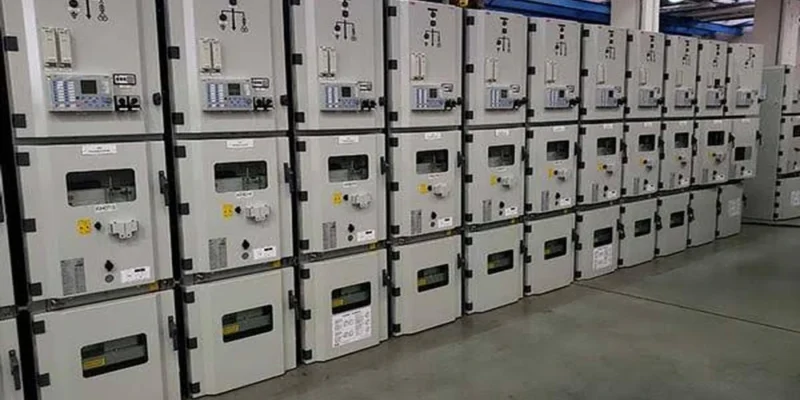
Large facilities such as hospitals, universities, industrial plants, and data centers often receive power at medium voltage before stepping it down for use inside the building. The equipment that protects and controls those medium-voltage circuits has to be rugged, reliable, and safe to maintain. That is the role of metal-clad switchgear.
Unlike the general phrase “switchgear in a metal box,”metal clad switchgear describes a specific, tightly defined class of equipment. Its construction requirements give it distinct advantages in safety and serviceability. Here is what defines it, how it is rated, and where it is typically used.
A Definition Based on Construction
The term metal-clad refers to a set of construction features, not simply a metal enclosure. Equipment must meet these features to carry the name.
- Draw-out circuit breakers: The main switching devices can be racked out of their cells for maintenance.
- Grounded metal barriers: Separate the breaker, bus, and cable compartments from one another.
- Insulated bus: Primary bus conductors are covered with insulating material.
- Automatic shutters: Cover primary connections when a breaker is withdrawn.
- Mechanical interlocks: Help prevent unsafe operating sequences.
How It Is Rated
Metal-clad switchgear carries several ratings that engineers match to the electrical system.
- Rated maximum voltage: The highest system voltage the equipment is designed for.
- Continuous current: The current the bus and breakers can carry without overheating.
- Short-circuit current: The fault current the breakers can interrupt.
- Short-time withstand: How long the equipment can carry fault current without damage.
- Basic insulation level: The equipment’s ability to withstand voltage surges such as lightning impulses.
Standards That Apply
In North America, metal-clad switchgear is defined and tested according to IEEE standards, particularly the C37 series, along with related ANSI and UL requirements. These documents set construction rules and test procedures so equipment from different manufacturers performs to a common baseline.
Common Applications
- Utility service entrances: Receiving medium-voltage power at large campuses.
- Industrial plants: Feeding large motors and process equipment.
- Data centers and hospitals: Where uptime and maintainability are critical.
- Generation and renewables: Connecting generators, solar farms, and storage to the grid.
Advantages for Safety and Maintenance
Compartmentalization helps contain a fault to one section, reducing the chance that a problem spreads through the lineup. Draw-out breakers let crews isolate and service one breaker while the rest of the system stays in operation. Many modern designs also offer arc-resistant construction and remote racking, which keep workers farther from energized parts.
Monitoring and Digital Features
Protective relays, power meters, and temperature sensors can be integrated into the lineup. These devices support faster fault detection, condition monitoring, and maintenance planning based on equipment health rather than fixed schedules.
Questions to Ask When Specifying
- What voltage and fault current levels will the equipment see?
- Is arc-resistant construction required for the installation area?
- How much space is available for the lineup and its working clearances?
- Which monitoring and communication features does the facility need?
- What spare sections or breakers should be included for future growth?
Safety Note
Medium-voltage equipment presents serious electrical hazards. Specification, installation, testing, and maintenance should be performed only by qualified engineers and technicians following applicable codes, standards, and utility requirements.
Dependable Power for Critical Facilities
Metal-clad switchgear combines compartmentalized construction, draw-out breakers, and rigorous standards to deliver reliable medium-voltage protection. For facilities where power continuity and safe maintenance matter, it provides a strong foundation for the entire electrical system.





Comments