
 By
By 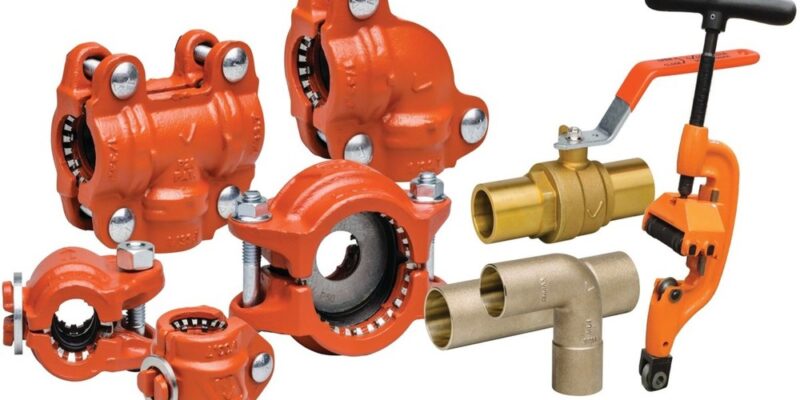
In industrial piping systems, reliability, speed of installation, and safety are critical. Whether in construction, oil and gas, water treatment, or manufacturing, even minor inefficiencies in piping connections can lead to costly delays or failures. One solution that has transformed modern piping systems is the use of Victaulic couplings.
Known for their durability, flexibility, and ease of installation, Victaulic couplings have become a preferred choice across industries. Understanding how they work and how to use them effectively can help maximize both efficiency and safety in your projects.
What Are Victaulic Couplings?
Victaulic couplings are mechanical pipe joining systems that connect pipes using a grooved-end design. Instead of welding or threading, the pipe ends are grooved, and a coupling housing is placed over the joint with a gasket inside. Bolts and nuts are then tightened to secure the connection.
This method creates a strong, leak-resistant joint while allowing a degree of flexibility and movement within the system.
Why Victaulic Couplings Are Widely Used
Victaulic couplings offer several advantages over traditional joining methods.
Faster Installation is one of the biggest benefits. Compared to welding or flanging, couplings can be installed quickly with minimal tools, reducing labor time and project costs.
Improved Safety is another major advantage. Since no hot work such as welding is required, the risk of fire hazards and accidents is significantly reduced.
Flexibility and Movement allow the system to absorb vibration, thermal expansion, and contraction. This helps prevent stress on pipes and reduces the likelihood of damage.
Easy Maintenance makes it simple to disassemble and reassemble piping systems for repairs or modifications.
Consistent Quality ensures uniform connections, reducing the chances of human error during installation.
Key Components of a Victaulic Coupling
A typical Victaulic coupling consists of several essential parts.
The Housing is the outer shell that encloses the pipe ends.
The Gasket provides a seal to prevent leaks and is selected based on the fluid type and operating conditions.
Bolts and Nuts secure the coupling and ensure proper compression of the gasket.
Grooved Pipe Ends are specially prepared to fit securely within the coupling system.
Each component plays a critical role in ensuring a safe and efficient connection.
Types of Victaulic Couplings
There are different types of couplings designed for specific applications.
Rigid Couplings are used where movement is not desired, providing a firm and stable connection.
Flexible Couplings allow angular deflection and movement, making them ideal for systems subject to vibration or thermal changes.
Reducing Couplings connect pipes of different sizes while maintaining a secure joint.
Specialty Couplings are designed for unique applications such as high-pressure systems or corrosive environments.
Choosing the right type depends on the requirements of your piping system.
Best Practices for Maximizing Efficiency
To get the most out of Victaulic couplings, it is important to follow proper installation and planning practices.
Ensure accurate grooving of pipe ends to achieve a proper fit.
Use the correct gasket material based on temperature, pressure, and fluid compatibility.
Tighten bolts evenly to ensure uniform pressure and avoid leaks.
Plan system layout to take advantage of the flexibility offered by couplings.
Train workers on proper installation techniques to improve speed and accuracy.
Enhancing Safety with Victaulic Couplings
Safety is a top priority in any industrial environment, and Victaulic couplings contribute significantly to safer operations.
By eliminating the need for welding, they reduce exposure to hazardous fumes and fire risks.
Their reliable sealing minimizes the risk of leaks, which is especially important in systems carrying hazardous fluids.
The ability to quickly assemble and disassemble connections also reduces downtime during maintenance, improving overall operational safety.
Common Mistakes to Avoid
Improper grooving can lead to weak connections and potential leaks.
Using the wrong gasket material can result in failure under specific operating conditions.
Over-tightening or uneven tightening of bolts can damage components and reduce performance.
Neglecting regular inspection and maintenance can lead to long-term issues.
Conclusion
Victaulic couplings have revolutionized industrial piping by offering a faster, safer, and more flexible alternative to traditional joining methods. By understanding their components, types, and best practices, you can significantly improve the efficiency and reliability of your piping systems.
Whether you are working on a new installation or upgrading an existing system, incorporating Victaulic couplings can help you achieve better performance, reduce costs, and maintain high safety standards in your construction projects.







Comments