
 By
By 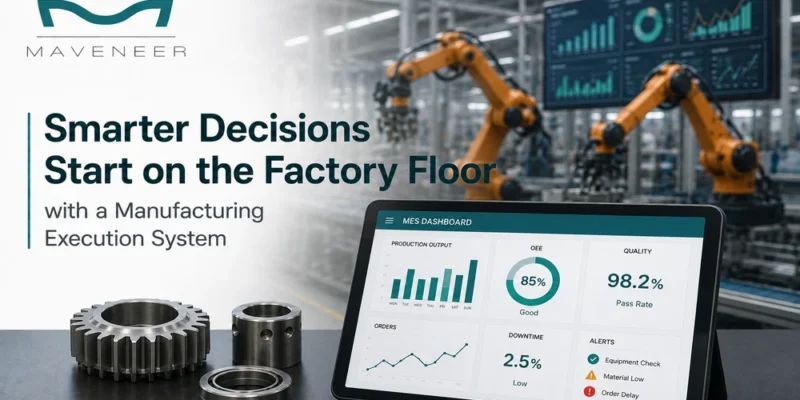
Every manufacturing company is confronted with hundreds of decisions on a daily basis. Is it business as usual for production on the current line? Is there enough for Next up? What’s behind the fall in output this afternoon? The decisions stemming from these questions can only be as good as one thing − credible information available in time.
However, in most of the factories they are still working on delayed reports or manual driving updates. In other words, the chance to correct errors frequently occurs long before they manifest in a spreadsheet. A manufacturing execution system solves that by providing managers with a live view of production occurring in real-time.
Data is More Valuable Than Equipment
Modern machines can serve thousands of products per day, but no machine will improve the efficiency. Many manufacturers also require accurate production data to get a sense of what occurs across the factory.
A manufacturing execution system (MES) aggregates data from different production stages and displays it in an easily digestible manner. No longer have to compile reports across departments before they can make decisions.
Instead they can spot delays, monitor output, and quickly cope when production conditions change.
Faster Decisions Reduce Costly Delays
Picture a production line coming to an almost standstill because one machine is performing below its normal capacity. Production targets may already be missed, if it goes unnoticed until the end of the shift.
Now, with a manufacturing execution system, supervisors can observe shifts in performance nearly in real time. to allow maintenance teams to investigate the cause of the issue before it impacts a whole production schedule.
They allow you to make quick changes in order to avoid more extensive operational issues, thereby minimizing downtime.
Converting Daily Data into Lasting Improvements
How production data feeds better business for future projects?
Manufacturers can analyze data to find answers for questions like:
- What are the most efficient production lines?
- Where do delays happen the most?
- What products need more quality controls?
- How often need the equipment serve?
- Which shifts persistently achieve production targets?
This intelligence offers valuable insight − rather than relying on guesswork for their own operations.
Supporting Every Department
Broadly speaking, it is much more than factories producing. Purchasing workers see material consumption, quality inspectors check finished goods, and senior executives scrutinize the overall results.
With a connected MES, every department has access to real-time actionable information without losing reliability. It leads to reduced losses to double reporting and directs teams towards common production objectives.
Improved operational outcomes and better communication often leads to better operational outcomes.
Decision Making − Selecting a Service That Offers Measurable Value
All varying priorities of each manufacturer means that choosing the right system requires careful thought.
Before investing, businesses should consider:
An ideal solution is future proofed without excess complexity.
Better Data Creates Better Manufacturing
All successful manufacturing is not based upon guesswork but making the right decisions. An effective, reliable manufacturing execution system delivers the information businesses need to maximize efficiency, mitigate production risks, and respond to changing demand with assertions. Manufacturers can also establish stronger daily operations and build a more successful, competitive tomorrow by turning factory data into actionable insights.






Comments